Transforming Teaching Education

News

News

Using Data to Strengthen Ghana’s Secondary Education Reform

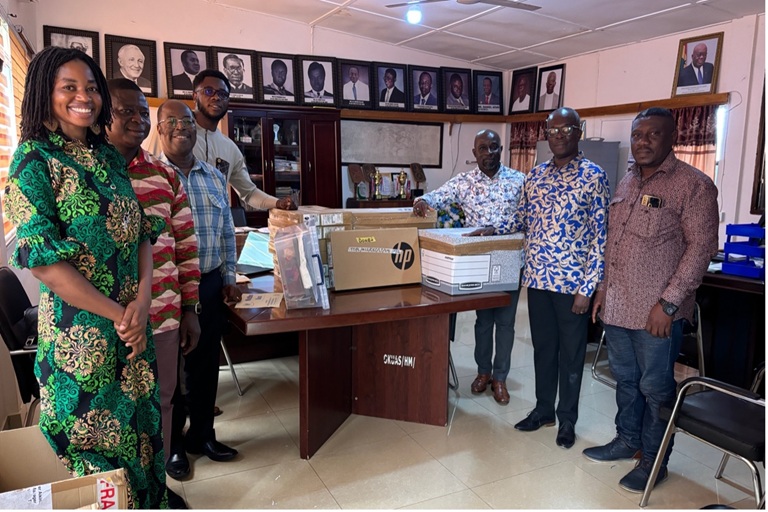
Using Data to Strengthen Ghana’s Secondary Education Reform Image 1: Cross section of Volta Regional Oversight Committee members discussing the SEI Dashboard data (https://t-tel.shinyapps.io/secondary_reform/) Ghana’s Ministry of Education recognizes that strong data underpins good decisions. With over 700 Senior High Schools and Senior High Technical Schools and more than 30,000 basic schools, tracking which schools are performing well and which need support is vital.  Reliable and timely information is essential to driving success. Whilst basic schools had the Mobile School Report Card (mSRC) to track progress, Senior High Schools lacked an equivalent system. Beyond the Free SHS portal, which tracks enrolment and the annual EMIS data collection, there was no mechanism to monitor and track key metrics on teaching and learning.  A Deep Dive carried out by the Ministry of Education and T-TEL in 2021 found that Ghana Education Service (GES) Regional Education Offices had very little data from Senior High Schools and found it difficult to identify which schools were doing well or struggling. Whenever they needed data from schools they had to make ad hoc requests. Building Something New Together The introduction of the secondary education reform in 2023 created an urgent need for a more responsive and data driven system. With a new curriculum, new assessment system, guidance and counselling standards, School Improvement Plans and Professional Learning Community sessions being rolled out across schools, the Ministry needed a way to monitor whether these reforms were being implemented with fidelity across schools. The system could no longer rely on annual or ad hoc data. A coordinated, real-time approach became essential. In 2023 the Ministry of Education, supported by T-TEL and the Mastercard Foundation, brought all key actors to the table to design a shared solution. This included the Ghana Education Service (GES), the National Council for Curriculum and Assessment (NaCCA), the West African Examinations Council (WAEC) and other agencies. This solution was designed to provide data to answer key questions related to the reforms. The process was collaborative with institutions working together to decide what needed to be tracked and how the system should function.  Agencies agreed on the creation of the Secondary Education Institutions (SEI) dashboard (https://t-tel.shinyapps.io/secondary_reform/) , an open-source tool designed to bring visibility, accountability and informed decision-making to the reform. This system covers over 720 schools, 68,000 teachers and almost 1.5 million learners with an operating cost of only $500 per month, a cost which the system can afford to sustain. What the Dashboard Tracks The SEI dashboard focuses on core elements of the secondary education reform. Attendance and topics covered during weekly teacher-led Professional Learning Communities (PLC). This is where teachers learn from each other and improve their practice. Through the dashboard, more than two million hours of PLC sessions organised across schools have been tracked, showing the scale of teacher collaboration and professional learning happening nationwide. Student records, monitored through the WAEC Student Transcript Portal, which is linked to the SEI Dashboard. This ensures learners have complete and accessible academic records. Over 60 million records have been uploaded since the system went live in 2024, representing a 97.2% national average completion rate. Lesson observation data tracks whether teachers are using new teaching approaches in their classrooms. School Improvement Plans (SIPs) are monitored to check whether schools are delivering their From the dashboard, 710 schools have uploaded SIP objectives with an 86.3% overall target completion rate. The dashboard also tracks tablet distribution and usage, trends from the Teacher Helpline showing what support educators need and participation in Values Learning Community sessions as part of character education for young people. Image 2: PLC attendance from the dashboard Operationalising the data The existence of the data is not enough to be effective, it must be regularly reviewed and acted upon. Every Ghana Education Service Regional office meets monthly through a Regional Oversight Committee, chaired by the Regional Director of Education. This Committee involves regional representatives from the Conference of Heads of Assisted Secondary Schools (CHASS) and the National Schools Inspectorate Authority (NaSIA) as well as Ghana Education Service staff.  Together they review the dashboard data and decide what to do next, with Regional Monitoring Teams making visits to schools where issues have been identifed. Ghana Education Service then operates a monthly National Oversight Committee meeting where all 16 Regional Directors attend online to discuss progress and areas which need attention and support from national agencies. At a recent National Oversight Committee meeting, regional representatives shared updates on their progress. Rafic Ben Sam, Planning Officer from the Western Region Education Office, explained how the dashboard helps his team see what schools are doing in key reform areas. “During visits, our regional monitoring teams observe how school management and teachers are implementing the new Guidance and Counselling framework. We track PLC attendance and watch how schools upload data to the dashboard,” he noted. His team made five visits to assigned schools in the first quarter, with the Regional Director joining four follow-up visits to verify progress and address challenges identified during earlier monitoring.  The dashboard makes information visible so regions can act, whether the data shows good performance or reveals problems. When completion rates were low for student data uploads on the Student Transcript Portal, Regional Directors and their teams engaged schools directly and sometimes sent formal letters requiring schools to upload the needed data. When PLC attendance was low in some schools, regional teams engaged school management to ensure teachers participated in sessions. This is how the reform stays responsive to what is actually happening on the ground. Problems get identified early. Solutions are tested quickly. What works gets shared. The dashboard data is easily accessible to staff from school, district, regional and national levels. It is used by approximately 1,200 GES staff every day, showing how it has become a key pillar of the secondary education reform. What The Data Means for the Ministry and Schools The real value of the SEI dashboard lies in how it drives decisions and action across the system. The data does
News

“I Want the Same Opportunity as Everyone Else”: Access to Mathematics for Learners with Visual Impairment at Okuapemman School

“I Want the Same Opportunity as Everyone Else”: Access to Mathematics for Learners with Visual Impairment at Okuapemman School When Erica Tetteh was told in her final year of Junior High School (JHS) that she could study mathematics at Senior High School (SHS), she did not believe it was possible.  For years, the reality for learners with visual impairment progressing from JHS to SHS has been the absence of mathematics at the SHS level, a barrier that constrained their subject choices, closed doors to certain tertiary programmes and narrowed their life options. So, what had changed? In 2024, the National Council for Curriculum and Assessment (NaCCA) and Ghana Education Service (GES) through its Special Education Division (SpED), with support from T-TEL and the Mastercard Foundation, began a targeted reform to redefine the pathway for inclusive education. A significant component of this reform was a structured approach that makes mathematics accessible to learners with visual impairment through adapted curricula and assistive technology. Okuapemman School became the first SHS to implement this approach opening a pathway that other schools soon signalled they were ready to follow. A diagnostic exercise in 2024 showed that ten out of sixteen blind and low vision learners at Okuapemman SHS had already met a foundational mathematics benchmark, confirming both their interest and capacity. What they lacked was a clear pathway for them to learn mathematics at SHS level and sit for examinations. The core problem was not willingness but access – insufficient tactile materials, limited braille resources, scarce teacher expertise and lack of assistive devices in classrooms. Learners with visual impairment and a representative from the National Council on Persons with Disability (NCPD) during the 2024 diagnostic assessment at Okuapemman SHS The intervention was comprehensive, spanning different layers of support. First, the curriculum and teaching and learning materials were adapted. This involved translating key concepts into tactile and braille formats. Learning materials were redesigned for non-visual access, and alternative methods were developed for tasks that traditionally rely on sight, such as interpreting graphs and diagrams. The second element was technology. At Okuapemman SHS, teachers and learners benefited from resource packages and training that translated policy into practical classroom support. The provision of “Math in a Box” kits and twenty laptops equipped with screen readers along with specialised software to support access to mathematical content demonstrated a strong commitment to making mathematics accessible. These laptops supplemented the existing materials at the school’s resource centre, expanding its capacity to support learners during lessons and strengthen the centre’s ability to provide ongoing training. Thirdly, teacher capacity was built. Specialists in teaching mathematics to blind and low vision learners were supported by a partner network that included GES, NaCCA, National Council on Persons with Disability (NCPD) and the Ghana Blind Union (GBU). GES and school management went a step further by approving extended vacation arrangements on two occasions, giving teachers and learners extra time to cover more topics and develop ICT skills. Finally, the approach integrated assessments that are responsive to learner needs and preferences. An officer from GES SpED, accompanied by T-TEL staff members (left), donates 20 laptops and ‘Math in a Box’ kits to Okuapemman SHS management (right), received by the Headteacher, Assistant Head and a teacher With these interventions, the reform was set in motion by a shared belief that the ability to study mathematics should not depend on sight. It is a reform that set Erica’s educational journey on a different trajectory. Now, in Form 2, Erica says she is studying a subject previously off limits with a mix of doubt and determination. “I want to write mathematics [WASSCE] because I want the same opportunity as everyone else. Our seniors did not study mathematics and they are struggling at the tertiary level but I have an advantage here. When I was told I would study mathematics at SHS level, I did not believe it was possible until I got here.” Erica’s words reflect both the challenges she faces and the ambition that drives her. She also highlights the practical realities: “Some topics take longer to understand and require patient guidance. It is not easy, but once you understand it, you feel confident. You feel like you belong in the class.” Archibold, another Form 2 learner, previously attended a mainstream school, where he relied on large print and benefited from early exposure to digital tools. Now at SHS, assistive technology supports his studies and examinations in the same way as his sighted peers. “I was lucky to have exposure to computers and digital tools early on. Now at SHS, the school allows me to use assistive technology for my exams which helps me keep up and be confident.” His ambition is clear: to write the WASSCE in 2027 and become a lecturer. A teacher during a mathematics lesson for blind learners at Okuapemman SHS What has made the approach successful is the coordination behind it. NaCCA and GES worked with GBU and teachers of learners with visual impairment to design materials that are practical and usable in real classroom settings. This collaboration aims to build sustainable pathways into mathematics for blind and low vision learners. The use of assistive technology, including specialised devices and screen readers, enables learners to study mathematics on equal terms with their sighted peers. So far anecdotal feedback suggests strong potential scaling while also revealing challenges that must be carefully managed. Key indicators show that learners with visual impairment can study mathematics when the right support systems are in place.  There are positive signals in the data. The diagnostic benchmark confirmed readiness and capacity, learners are engaging with the adapted curriculum and technology is supporting inclusive teaching and assessment. Yet issues remain about infrastructure gaps, the pace of teacher upskilling and the sustainability of funding as the intervention expands. As the pilot at Okuapemman School shows early promise and receives positive feedback, six other schools – Mawuli School, Adidome SHS, Ghana National College, Sirigu SHS, Wenchi SHS and Wa SHS have expressed interest in introducing the adapted mathematics curriculum so

News

Scaling Educational Innovations in Ghana: Principles for Success and Pitfalls to Avoid

Scaling Educational Innovations in Ghana: Principles for Success and Pitfalls to Avoid Ghana has demonstrated a continual commitment to ambitious educational reforms. Over the past twenty years, we have initiated and piloted several pioneering initiatives, from the National Teachers’ Standards (NTS) and the Bachelor of Education (BEd.) Curriculum reforms to the introduction and implementation of Professional Learning Communities (PLC) within Senior High Schools as part of the Ministry of Education’s Secondary Education Reform. Additionally, numerous projects have been undertaken by non-governmental organisations and research institutions. Several of these pilots proved effective. Conducted within limited, controlled environments, they yielded impressive results. However, when attempting to scale these initiatives to a national level, failures emerged. Reforms extended to more schools; nonetheless, they seldom enhanced the depth of learning. Although enrolment numbers increased, educational outcomes remained largely static. While promising innovations expanded in scope, their impact on learning depth was minimal, resulting in essentially unchanged educational outcomes. Why does this happen, and how can Ghana do better? This pattern is not exclusive to Ghana; it represents a worldwide challenge. However, comprehending the underlying causes and exploring alternative approaches are critically important for the future of our educational system. Drawing on international research, John List’s work on scaling evidence, Cynthia Coburn’s “Rethinking Scale”, Buccini et al.’s framework on implementation quality, Zamboni et al. on scalability, and the World Bank’s “Delivering at Scale” blog, and combining them with Ghana’s own experience, this blog outlines seven principles for scaling educational reforms effectively. We also highlight common pitfalls that have tripped us up before. Seven Principles for Scaling That Work Ground scaling in rigorous evidence Scaling should never outpace the support provided by evidence. Rigorous piloting, adaptive trials, and cost-effectiveness analyses must inform decisions regarding transitioning from laboratory settings to educational environments.  John List cautions against nationwide implementations based on insufficient or incomplete pilot studies. In the absence of robust evidence, there is a risk of expanding programmes that appear promising theoretically but fail in practical application. Ghana’s lesson: The Free Senior High School (FSHS) policy was introduced in 2017 without comprehensive piloting of associated costs, infrastructure needs, or quality outcomes. While it markedly increased access, a noteworthy accomplishment, the subsequent implementation of the double-track system underscored the dangers of scaling without thorough evidence collection. We expanded access before fully understanding the requirements for maintaining quality alongside broader reach. Focus on implementation quality, not just reach Expanding the number of schools or teachers involved is insufficient. The quality must be preserved at all costs. Buccini et al. (2025) emphasise that capacity-building and implementation quality frequently deteriorate without robust monitoring systems and continuous support. Initiating a reform is one aspect; ensuring its effective execution across all classrooms, districts, and regions is another. Ghana’s lesson: The reforms in Bachelor of Education (b.ed.) programs within Colleges of Education were successful, particularly when emphasis was placed on tutor training, the leadership capacity of principals, and institutional quality assurance. In these environments, student teachers more effectively embraced innovative learner-centred pedagogies due to the stability of support structures. Additionally, the quality of education was consistently upheld, as robust systems were established to sustain high standards. Adopt a systemic and context-sensitive approach Scaling initiatives must be synchronised with the comprehensive education ecosystem, including curriculum, teacher training, assessment, and governance. Coburn (2003) emphasises that scalability should be extensive, encompassing a broad reach, and profound, influencing beliefs, norms, practices, and structures. Reforms should not exist in isolation; instead, they must integrate with existing systems and be adapted to their specific contexts. Ghana’s lesson: The Professional Learning Communities in Senior High Schools were effective because they were integrated into existing School Improvement Plans (SIPs) and leadership frameworks. Educators and headteachers regarded them as integral to their responsibilities, rather than as supplementary initiatives externally imposed. Conversely, isolated ICT pilots faced difficulties in aligning with systemic processes and tended to diminish rapidly once external support ceased. Ensure stakeholder ownership Ownership constitutes the fundamental basis of sustainability. Innovations imposed externally are seldom sustainable. Scaling efforts must promote shared responsibility among ministries, educational institutions, educators, parents, and communities. Teachers, parents, and local leaders must perceive reforms as their own initiatives, rather than directives imposed from above.  Coburn (2003) emphasises that such an approach enhances legitimacy, encourages sustained effort, and ensures that innovations are integrated into routine practice rather than regarded as temporary projects. The World Bank’s blog on scaling highlights that reforms are more likely to endure when local stakeholders collaboratively develop solutions. Ghana’s lesson:  The National Teachers’ Standards (2017) attained credibility through the involvement of teachers’ unions and Colleges of Education from the outset, thereby actively shaping the standards rather than passively accepting them. Conversely, the implementation of the standards-based curriculum in 2019 initially encountered resistance from teachers, attributable to limited opportunities for consultation. When teachers are marginalised, engagement tends to diminish. Plan for sustainability from the start Sustainability necessitates early investment in political, financial, and institutional support. Integrating reforms into existing structures, such as teacher education, professional learning communities, and curriculum cycles, ensures their longevity beyond donor timelines or political cycles. Scaling efforts often collapse when donor funding ends or political priorities shift. Zamboni et al. (2019) advocate for political commitment as well as institutional and financial anchoring from the inception to ensure sustainability. Ghana’s lesson:  Numerous ICT in education pilot programmes, including one-laptop-per-child initiatives, failed due to the absence of long-term funding for device maintenance, teacher retraining, and curriculum integration. Although preparations were made for the launch, long-term sustainability was not anticipated. Without continued financial support and institutional endorsement, even the most promising initiatives tend to diminish. Use adaptive and iterative scaling pathways Scaling is an ongoing process of continuous learning and refinement, rather than a singular leap.  List (2024) emphasises the significance of feedback loops, real-time monitoring, and adaptive course correction. Reforms must be responsive and adaptable. Practices effective in one district may require modification in another; absent mechanisms for learning and adaptation, scaling risks become inflexible and fragile. Ghana’s lesson: School Performance Improvement Plans (SPIPs) initially encountered challenges. The tools were excessively complex, and headteachers lacked adequate support. However, through iterative monitoring, the development of simplified

News

Training and Equipping Teachers: Nexus for success of new SHS, SHTS and STEM curriculum.

Training and Equipping Teachers: Nexus for success of new SHS, SHTS and STEM curriculum. With the reopening of schools, Ghana is set to roll out the new Standards-Based Curriculum for Senior High, Senior High Technical and Science, Technology, Engineering and Mathematics (STEM) schools. The introduction of the new curriculum is a significant milestone in Ghana’s efforts at delivering 21st-century education.The new curriculum is designed to prepare learners for the world of work, responsible adulthood and further academic studies by equipping them with 21st-century skills, competencies, character qualities and shared Ghanaian values.  The curriculum strongly focuses on the learner, requiring teachers to be effective facilitators. As facilitators, teachers will oversee learning, both inside and outside the classroom, ensuring practical teaching which helps learners to create knowledge within a relatable, learner-focused and disciplined environment. Indeed, teachers are the fulcrum of any effective education system. Recognising this, teachers have been prioritised by the Ministry of Education and its agencies -National Council on Curriculum and Assessment (NaCCA), Ghana Education Service (GES), West African Examinations Council (WAEC), National Teaching Council (NTC) and National School Inspectorate Authority (NaSIA)—as key agents to drive the successful implementation of the new curriculum. This prioritisation led to the introduction of Professional Learning Communities (PLC) sessions in all public secondary schools in May 2023. Teachers across all these schools have been meeting every week, supported by accompanying training materials to ensure that they understand the new curriculum.  This is in addition to the development of a Curriculum Microsite to support teaching and learning and the production of Teacher Manuals and Learner Materials. These interventions aim to ensure that teachers have the requisite knowledge, skills and competencies for effective curriculum delivery. Professional Learning Communities (PLC): PLCs are weekly meetings held in schools, where teachers discuss and explore how to integrate interactive pedagogies, differentiated assessment strategies and other soft skills to improve learners’ experience and ensure learners grasp concepts adequately and can apply knowledge in real-life situations.In these weekly PLCs, teachers discuss the curriculum in-depth focusing on the content, pedagogy and assessment in the subject-specific curriculum. The sessions are guided by PLC handbooks, departmental PLC handbooks, subject-specific PLC handbooks, teacher manuals and learning planners. These interactions among teachers have provided an enhanced institutionalised structure for continuous professional development at no cost to teachers, which ensures that peer learning and sharing of real classroom experiences strengthen and improve lesson delivery. PLC sessions also provide an opportunity for teachers to discuss the curriculum in depth, focusing on integrating 21st-century skills and competencies, Gender Equality and Social Inclusion (GESI), Social and Emotional Learning (SEL) and shared Ghanaian values. This holistic approach ensures that the curriculum is relevant and inclusive.       “We are building a critical mass of teachers to deliver high-quality education that is relevant, value-oriented and impactful to the country’s present and future development needs” says Prof. Jonathan Fletcher, Founding Dean of the School of Education and Leadership at the University of Ghana and Key Advisor on Curriculum to NaCCA.    He further explained, “The new curriculum’s success is a shared and collective responsibility, and teachers, as the primary implementors are being supported to navigate its complexities through comprehensive training and professional development opportunities”. Teacher Manual Another key document that will support teachers is the Teacher Manual. Subject Specific Teacher Manuals contain all the content, pedagogy and assessment information needed by teachers to plan and deliver their lessons effectively each week based on the curriculum. These manuals systematically break down the curriculum into teachable parts, where teachers are provided with the appropriate pedagogies, teaching and learning resources and the learning tasks associated with a given lesson. Curriculum writers, comprising of over three hundred experts drawn from all walks of life including secondary school teachers, College of Education tutors, University faculty and industry professionals have meticulously and thoroughly developed these manuals to signpost teachers and learners on the demands and expectations of what is required of them when engaging with the curriculum. To make these manuals usable, a structured template (Learning Planner) has been developed to ensure that teachers plan their lessons by considering the cross-cutting issues championed by the new curriculum. In addition, these subject-specific manuals are expansive and provide further digital links for teachers to research, plan and deliver lessons that integrate 21st-century skills and competencies, Shared Ghanaian Values, Differentiation, ICT, Gender Equality and Social Inclusion, and Social and Emotional Learning. Learner Materials Learner materials are resources that provide learners with the opportunity to access educational materials both in school and at home, thereby enhancing their learning experiences. Working with the teacher unions, the Ghana National Association of Teachers (GNAT), the National Association of Graduate Teachers (NAGRAT) and the Concerned Teachers of Ghana (CCT-GH), as well as subject associations, learner materials have been developed to ensure that learners have reference materials that will not only enable them to come to the class prepared but will also make the classrooms more efficient places of learning. These learner materials are structured to align with the teacher manuals, ensuring that both teachers and learners can effectively navigate the curriculum. The learner materials are designed to be interactive and engaging, incorporating a variety of activities that cater to different learning styles and needs. This approach supports the academic growth of learners and encourages independent learning and critical thinking. The development of these materials addresses the significant issue of the ‘no textbooks’ gap that often accompanies the introduction of a new curriculum. Learner Materials are available for free on the Curriculum Microsite and are also being loaded onto the tablets being supplied to Senior High Schools.   Curriculum Microsite A microsite has been developed by the Ministry of Education, GES and NaCCA. The microsite is a resource trove that serves as a hub for all teaching and learning resources developed for the curriculum, including Teacher Manuals, PLC Handbooks and Learner Materials and includes a host of interactive links for further materials. With this microsite, teachers are empowered at the click of a button with all they need to succeed

News

Ghana set to roll out new SHS curriculum …beginning 2024-2025 academic year

Ghana set to roll out new SHS curriculum …beginning 2024-2025 academic year Director-General of the National Council for Curriculum and Assessment (NaCCA), Prof. Yayra Dzakadzie The Ministry of  Education, through its agencies, the National Council for Curriculum and  Assessment (NaCCA) and Ghana Education Service (GES), has announced its readiness to roll out the new secondary education curriculum when school reopens for the 2024-2025 academic year. The new curriculum covers Senior High School (SHS), Senior High Technical School (SHTS) and Science, Technology, Engineering and Mathematics (STEM) nationwide. Over the past two years, NaCCA, the agency responsible for developing curricula in the country has been meticulously planning and working with GES for the development and rollout of the new curriculum. The preparation has involved extensive stakeholder engagements to gather insights on what the curriculum should emphasise and achieve and a collaborative process which saw the involvement of over 300 experts from across the country, all contributing to the development of a robust curriculum designed to shape the future of education in Ghana.Speaking about the new curriculum, in Accra yesterday, the Director-General of the National Council for Curriculum and Assessment (NaCCA), Prof. Yayra Dzakadzie, said “The new curriculum is very transformative and designed to shape the next generation of Ghanaian leaders.” He said “The new curriculum is not just an update but a groundbreaking shift towards equipping learners with the essential skills needed to succeed in the fast-paced modern world. At the heart of the curriculum lies a commitment to nurturing critical thinking, fostering creativity, and honing problem-solving abilities.” He further explained that this was the first time that Ghana had developed a Senior High School Curriculum that focuses on Shared Ghanaian values, attempting to educate a generation of Ghanaian youth who would love and be proud of our country as well as contribute effectively and efficiently towards its development. The curriculum implementation, he said would commence at the beginning of the 2024/2025 academic year, and was expected to redefine the future of Ghana’s education. A critical component of the planning phase has been the focus on teacher preparation. Weekly Professional Learning Community (PLC) sessions are continuously organised to equip teachers with the necessary skills to implement the curriculum effectively.   “Additionally, teacher manuals that align with the new curriculum across all subjects have been developed through a partnership of the Ministry of Education and various subject associations. This is to ensure that educators have the right tools to guide their students,” he said. Mr Dzakadzie said the new curriculum had been designed with three primary outcomes. “First, it aims to equip learners with essential 21st-century skills, ensuring that they are well-prepared for the demands of modern life. Second, it lays the groundwork for learners to pursue further education by providing them with a strong academic foundation,” he said. He said “Lastly, the curriculum is focused on preparing learners for the world of work, instilling in them the competencies and character qualities needed to thrive in their future careers and contribute positively to society. Ultimately, the curriculum will prepare learners to live responsible adult lives, further their education and enter the world of work.” SOURCE: GHANAIAN TIMES

News

Co-creating solutions to improve Inclusive Education at Mampong School for the Deaf.

Co-creating solutions to improve Inclusive Education at Mampong School for the Deaf. The National Council for Curriculum and Assessment (NaCCA) has written an ambitious new Senior High School (SHS), Senior High Technical School (SHTS) and Science, Technology, Engineering and Mathematics (STEM) curriculum that aims to ensure that all Ghanaian young people gain the 21st Century skills and competencies to progress in further studies, the world of work and adult life. This curriculum will be rolled out nationally from the start of the 2024/25 academic year. The Ministry of Education (MoE), NaCCA and Ghana Education Service (GES) have therefore identified 33 schools to trial the curriculum before national roll-out and one of these schools is Mampong School for the Deaf. NaCCA and GES’s commitment to Inclusive Education is demonstrated by the inclusion of Mampong School for the Deaf in the curriculum trial and the establishment of an Inclusive Education Expert Advisory Panel. This Panel, constituted by NaCCA in December 2023, is tasked with ensuring that the curriculum is inclusive and provides equal opportunities so that learners with disabilities can access quality education. In February 2024 Mampong School for the Deaf convened a comprehensive 3-day planning session to prepare for the new curriculum. This session involved the school’s management and board, community and parents, students, teaching and non-teaching staff. The session was facilitated by representatives from GES and Transforming Teaching, Education and Learning (T-TEL) using a set of participatory approaches called ‘Managing for Learning’. **** “The programme was good and in the right direction because the officials came to sit with us to come out with the needs of the school in order of importance and we also noted that it was the first time Deaf learners have been directly involved in things that affect us.” – Master Anthony Ayandoo, Boys School Prefect, Mampong School for the Deaf Group photo of learners at Mampong School for the Deaf after the three-day planning session. Master Anthony Ayandoo, Boys School Prefect (middle) in the front row  Managing for Learning is based on the principle that schools and the stakeholders involved in their management, operations and governance are best placed to understand the issues inhibiting student attainment and that, with support and facilitation, they can take the lead in owning and developing solutions to their challenges. This approach allowed community leaders, parents, management, teachers and learners to collectively identify key issues affecting learning outcomes and prioritize solutions in a costed action plan. The first day was dedicated to stakeholder identification, developing responsibility audit and mapping out those involved in improving learning and the extent to which these stakeholders were currently fulfilling their expected roles. The second day was focused on identifying and prioritizing issues and reaching agreement on these amongst all stakeholder groups. Stakeholders during plenary sessions  A facilitator writing down issues identified by the Parents and Community group Teaching and non-teaching staff group discussing issues identified On day three stakeholders thoroughly discussed each prioritized issue and developed practical solutions which were subsequently developed into a costed Curriculum Readiness Plan. This plan serves as a collective document outlining activities aimed at supporting the school in effectively implementing the new curriculum.  The plan contains four objectives: Improving teaching and learning resources – including the purchase of ICT equipment such as projectors, laptops, and printers as well as supporting teachers to develop low cost and no-cost teaching and learning resources. Making teaching and learning more practical – the school will adopt project-based learning methodologies. This approach will be complemented by organizing exhibitions where community members can view students’ showcased work. Regular refresher training sessions will be organised for teachers to effectively implement Universal Design for Learning (UDL) principles in their teaching approaches. Enhancing infrastructure and the school environment – this includes purchasing desks and beds for students as well as conducting maintenance and repairs. The lighting system in the school will also be improved. Improving relevant policies and advocacy for Deaf education – stakeholders identified areas where they will work with agencies such as the Ministry of Education, NaCCA and GES to ensure that curriculum and assessment methods take account of the needs of Deaf learners, including the introduction of a Ghanaian Sign Language curriculum; ensuring that more teachers are proficient in Ghanaian Sign Language (GSL) and enabling Deaf learners to benefit from both academic and technical education. GES has pledged to allocate GHS 350,000 to Mampong School for the Deaf to support implementation of the Curriculum Readiness Plan. The school community came together to collectively agree on how this funding is to be allocated across the various objectives and activities in the plan. Sharing her experience, the Queen Mother of Mampong expressed her delight at the prospect of the school receiving such assistance from GES. She noted that her long-term commitment to the school made this support particularly meaningful: “this support from GES is huge and I am happy because it will make a significant change. While the school still has further needs, this support is a big step. I am delighted to see the positive impact it will have on the school community. Everyone, including the learners share in this happiness, knowing that brighter days lie ahead for Mampong School for the Deaf.”  Nana Akua Perbea, Queen Mother of Mampong.   The Queen Mother, Nana Akua Perbea (second from left) in a group photo with management of Mampong School for the Deaf Mr. Erasmus Ayikwei, Assistant Headteacher Academic, described the entire stakeholder engagement process as an “eye-opener” leading the school to develop their own collective solutions to improve learning. He reassured stakeholders of management’s commitment to using the funds for their intended purpose. “The stakeholder engagement was the first of its kind organized in the school. It was an eye-opener, educative, and exciting to have all stakeholders engage themselves, resulting in crafting out a home-made strategic plan for implementation in the school. We are grateful to all stakeholders… contributions toward the crafting of the strategic plan were valuable and indispensable. Management wishes to assure all stakeholders that funds released

News

Creating role models to inspire tomorrow’s scientists: A.M.E Zion Girls’ Senior High School Celebrates International Day of Women and Girls in Science .

Creating role models to inspire tomorrow’s scientists: A.M.E Zion Girls’ Senior High School Celebrates International Day of Women and Girls in Science Students from A.M.E Zion SHS and University of Education Winneba gather in a classroom, ready to learn how to make low-cost and no-cost science experiments. February 11 marks International Day of Women and Girls in Science (IDWGIS), a significant occasion recognized by the United Nations to highlight the importance of gender equality in the field of science. This annual observance serves as an opportunity to celebrate the contributions of women in science and to encourage young girls to explore opportunities in STEM fields. This year’s theme, “Women and Girls in Science Leadership – a New Era for Sustainability,” emphasizes the significant role of female representation in driving sustainable development through science. To mark IDWGIS, Transforming Teaching, Education, and Learning (T-TEL) collaborated with the French Ambassador for Europe’s two largest science teaching networks – Science on Stage and Scientix – Michael Gregory to share hands-on science with teachers across senior high schools. Michael supports teachers and learners to conduct low-cost science experiments to make science lessons engaging, exciting, and effective. He was supported by Mr. Emmanuel Annan, Coordinator for the Resource Centre at Accra College of Education. They visited A.M.E Zion Girls’ Senior High School to spend some time teaching Form 3 female students how to perform Michael’s newest show “Particle Detectives” (www.scienceonstage.fr/particle-detectives), which he developed for CERN – the European Organization for Particle Physics. Wednesday started with Michael performing Particle Detectives for an audience of approximately 25 Form 3 students, 5 teachers and 13 student teachers from nearby University of Education, Winneba.  Following the performance, students were divided into groups to specialise in one of the experiments which they would perform the next day to basic school learners.  The rest of the day was spent testing out the experiments, advancing their understanding, and practicing to be ready for their performances the next day.   Michael Gregory conducting science experiments at A.M.E Zion Girls SHS Thursday started with the 25 Form 3 students performing for an audience of over 50 Form 3 students. After a brief debrief, Michael, Emmanuel and the students headed to the A.M.E Zion Basic School where they had another performance for over 50 Primary 6 students. The following science experiments were done: 1 – Paper Race 2 – Bernoulli Effect 3 – Air Vortex 4 – Coloured Fluorescence 5 – Hoop Glider Experiment 1: Paper Race Box text on experiments is based on the Particle Detectives experiment guide, published by CERN here: https://zenodo.org/records/10611185 The approach of training SHS students to conduct the experiments at the basic school was to offer the young learners relatable role models from their immediate surroundings and also facilitate effective communication between the SHS students and their primary school counterparts. The SHS students were able to communicate effectively with the primary school students, even using the local language where necessary. A.M.E Zion Girls students conducting science experiment in a basic school “This was a really special event for me – I’ve performed experiments at countless schools, but this event combined several ideas I’ve been working on for years.  I’ve had various science clubs based on the model of students teaching students, and even inspired many new science clubs here in Ghana, notably through my YES! International network. Using science performance to make cutting-edge research more accessible was a key part of the PERFORM project I worked on as a UNESCO volunteer in 2019” said Michael Gregory. “As you may have noticed, young kids (and even some adults) can have a very hard time understanding foreign accents here in Ghana.  Teaching older students to perform a science show for younger students provides an innovative way for my ideas to be shared with the younger ones in a more accessible and relatable way. Targeting girls was the last piece of the puzzle to come into place.  The idea started when I was speaking to people at the International Particle Physics Outreach Group.  They run a series of Masterclasses, and the past couple years have started off their season with girls-only masterclasses, led by female scientists, around the International Day of Girls and Women in Science.  At first glance, it seems like a great idea, but the more people I talked to, the more I learned about places where this actually compounds the problem of under representation of females in subsequent masterclasses, because both scientists and students who have already completed the girls’ masterclass are less likely to attend the mixed classes covering the same material later on.  I sought to create an alternative – instead of simply segregating and running the same program, creating something different, which can ideally increase, rather than decrease, girls’ interest in participating in other programing.  Teaching them to perform Particle Detectives seems to do just the trick!”   Students from A.M.E Zion Girls SHS and their teachers pose for a photo with Michael Gregory and Emmanuel Annan after the science experiment sessions

News

Universities Council for the Education of Teachers (UCET)

Universities Council for the Education of Teachers (UCET) Akwasi Addae-Boahene presenting at the UCET Conference Annual Conference 2023 On November 15th, 2023, a team from Ghana made up of Akwasi Addae-Boahene–Chief Technical Advisor T-TEL, Bea Noble-Rogers–Key Advisor T-TEL, Eric Ananga–Key Advisor T-TEL, Nana Akosua Owusu-Ansah-University of Education Winneba, Joyce Anku–University of Ghana, Rebecca Arthur- University of Education Winneba presented at the UCET 2023 Conference in Leeds United Kingdom. The theme for the 2023 Conference is Promoting Quality in Teacher Education, and the title of the presentation was “Senior High School Education in Ghana: The challenging path to Reform”. Introduction to the presentation The secondary education reform in Ghana aimed at providing high-quality relevant secondary education to equip graduates with 21st century skills and competencies, social and emotional learning, and character development in addition to literacy and numeracy. Central to this reform is the design of a new SHS/SHTS/STEM curriculum to produce graduates for the world of work, adult life, and further studies. The reforms introduce flexible pathways for progression to facilitate the choice of subjects in new SHS, SHTS and STEM curriculum. The emphasis on 21st century skills and competencies, character development, national values, Social and Emotional Learning (SEL), Information Communications Technology, Gender Equality and Social Inclusion (GESI) in the curriculum is aimed at producing graduates who can compete in the global knowledge economy. In addition, Assessment – formative and summative has been incorporated into the curriculum and aligned with the learning outcomes throughout the three-year programme. Ongoing Secondary Education Reforms in Ghana The presentation focused on the on-going reform process and the challenges likely to be faced in the implementation of the new curriculum. The presentation therefore focused on previous experiences and lessons learnt from the development of the primary school and JHS curricula, and how these have become important learning points for the new programme. The writing of the curriculum brought together subject experts from universities, schools, Colleges of Education, employers’ associations, and other experts in curriculum within the education sector. The draft curriculum was also subjected to an international experts’ panel review for feedback before it was finalized. Key activities undertaken in preparation for implementation include the trialing of the draft curriculum in schools including various stakeholders engagements to secure the necessary legal and political support of Cabinet. Additionally, weekly professional development (PD) sessions have been introduced in all Senior High Schools (SHSs), Senior High Technical Schools (SHTSs), and STEM schools across the country There are also plans to redesign the Secondary School Teacher Education Curriculum to focus on the delivery of the new curriculum. This will require a curriculum that prepares teachers in the use of learner centered pedagogical approaches and strategies, GESI responsive pedagogies, assessment and Supported Teaching in School to adequately equip them to deliver the new curriculum. Participants at the presentation got the opportunity to watch a compiled video of the curriculum trialing in selected schools where learners and teachers shared their experiences after the teachers trialed the curriculum in their classrooms. Post presentation workshop After the presentation a workshop was organized to elicit the views of the participants on the following issues: What steps have we missed?What should we be mindful of, addressing the challenges?What are the unforeseen challenges?What other strategies should we deploy? The workshop generated conversations among the participants. They shared their views and experiences from other contexts. Some participants stated that the curriculum as was presented is very good, promising, and ambitious. Some participants also highlighted the important issue of stakeholder ownership, and how this can be used against political transition in Ghana in 2025. In the view of the participants, the stakeholder engagement process carried out will positively guarantee the successful implementation of the curriculum notwithstanding the government in power. This according to some participants stemmed from their individual experiences of the curriculum implementation when there are changes in government. Others also cautioned on the ability of the government to provide the resources needed to implement the curriculum effectively. Some participants also spoke about teacher orientation, retraining and retention and suggested the government works hard to motivate and change the mindset of teachers to implement the curriculum successfully. In response to the comments and suggestions, the Chief Technical Advisor of T-TEL emphasized that since 2023, there has been a national rollout of professional development sessions in all Senior High Schools, Senior High Technical Schools, and STEM Schools across the country. This is done through weekly school based Professional Learning Communities with structured materials developed to introduce teachers to the key principles, philosophy, pedagogical and assessment approaches introduced in the curriculum. A participant suggested that apart from the professional development materials, teachers should be encouraged to form subject based professional learning communities beyond their schools to support each other throughout the implementation of the curriculum. A participant who had had several years of working in Ghana suggested that a lot of attention should be paid to the northern sector of Ghana when implementing the curriculum. Some participants also raised concerns about assessment. The participants asked about the plans that have been put in place to instill confidence in the proposed assessment system.  

News

Spotlight on Faustina Yankson: Newly-Qualified Teacher from OLA College of Education and former T-TEL/TTAG Intern.

Spotlight on Faustina Yankson: Newly-Qualified Teacher from OLA College of Education and former T-TEL/TTAG Intern. Faustina Yankson during her graduation from OLA College of Education Faustina Yankson, a graduate of OLA College of Education, is among the first batch of Bachelor of Education (B.Ed.) teachers who graduated from the 46 public Colleges of Education (CoEs) following the introduction of the new B.Ed. in Initial Teacher Education in 2018. This is her story Faustina narrates how she excelled in college, graduated with First Class Honours and also emerged as the Best Graduating Student in ICT. In her words, “I am bent on breaking barriers and look forward to being a transformative teacher”. For many people, the journey of life and decision of programme to pursue is triggered by circumstances and events beyond their control. For others, like Faustina, the choice to read Information and Communication Technology (ICT) and minor in Mathematics was driven by practical experience and understanding. Prior to entering College Faustina worked at a printing press for 9 months where she learnt how to use the computer for different printing jobs including graphic designing. This helped to influence her choice of programme to study at College. Faustina receiving an award for academic excellence A key part of the 4-year B.Ed. programme is an off-campus teaching practice called Supported Teaching in School (STS). This takes place every year across the four years of the B.Ed., culminating in a 12 week placement in Year 4 Semester 1. For her Year 4 STS Faustina was assigned to Kwabena Fori M/A JHS to teach ICT. However, when she arrived at school she faced a major challenge as there were no computers in the ICT lab. She recalls how challenging it was to teach ICT without computers or any other ICT devices. “They [students] only know the ICT devices in books but they have neither touched nor used them. Some don’t even know how computers and laptops work.”  To tackle this, Faustina approached some of the teachers in the school to find out if they had laptops which they could bring to school. At her first time of asking two teachers agreed to bring laptops to school for her to use.  Faustina continued to talk to the other teachers and was able to persuade them to bring three additional laptops. This meant she now had five laptops for the ICT class and one of the teachers also brought a projector from home. With ICT tools now available, Faustina’s next task was how to get the learners excited about the subject. She decided that ensuring practical teaching would help to encourage learning.  As she narrates: “I started from basic keyboard skills and then advanced to teaching them other techniques including how to set up google email addresses. I also gave take home exercises and encouraged the class to visit the community internet cafes to do their assignments. Within a week, I started seeing improvement in my class and a learner who had no interest in ICT started contributing in class. She enjoyed typing even though she was not very fast at it.” Faustina’s efforts and initiative continued to yield positive results. Management of the school sent letters to some people in the community, and they contributed to buy a projector for the school. A teacher in Faustina’s schools integrating ICT in his teaching Faustina enjoyed the time she spent at Kwabena Fori M/A JHS doing her STS. She loved teaching at the school so much that she asked to be posted there again to do her one-year national service after College. This time she was assigned to teach mathematics. The first few weeks were tough as she realized the students did not like math and showed little interest in the subject. She felt that this was partly because of the time the mathematics lessons took place, always in the afternoon when the learners were already tired. When she saw this, she spoke to the academic board to change math lessons from afternoon to morning. She noticed that in the morning, the students were more active and engaged. She also used downloaded and interactive videos to teach math as she noticed that “the learners want to be like the people in the videos.” Faustina and her students at Kwabena Fori M/A JHS. Faustina wants to overcome misconceptions about mathematics being difficult especially for girls. She said girls should be encouraged to participate in class. “Teachers should use positive language in the classroom to inspire both boys and girls to learn.” Faustina constantly reminds herself that she’s a role model in the classroom and in her community and will continue to give everyone in her class the opportunity to learn and explore. Internship at Transforming Teaching, Education & Learning (T-TEL) The internship scheme is a collaborative partnership between T-TEL and the Teacher Trainees’ Association of Ghana (TTAG) offered to final year student teachers twice a year for four weeks during College of Education vacation periods. Faustina was selected and had the opportunity to do an internship at T-TEL and believes it played a big role in shaping her mindset and approach to teaching.  Reflecting on her time at T-TEL, Faustina said “I knew very little about government reforms in education, but it is different now, a lot is happening to improve our education system.” She also observed Professional Learning Community (PLC) sessions being held at a number of Senior High Schools which surprised her because she thought PLC sessions were only done at the basic schools. She was able to contribute and add value to these sessions because of the knowledge and experience that she had gained through her B.Ed. Overall Faustina believes that her training, her practical experience of STS and her internship at T-TEL have all helped to prepare her to be an excellent teacher who can make a difference in the lives of her learners for years to come.

Scroll to Top