Transforming Teaching Education

News

News

Integrating ICT into teaching and learning: lessons from St. Monica’s and Mampong Technical Colleges of Education 

Integrating ICT into teaching and learning: lessons from St. Monica’s and Mampong Technical Colleges of Education   Interactive Display Screen. Information and Communications Technology (ICT) is a critical part of Ghana’s education reforms. Ghana wants to ensure that all teachers and learners are ICT literate so that technology is used for effective learning and education management. In 2018 the Government of Ghana introduced a new Bachelor of Education (B.Ed.) in Initial Teacher Education for all new entrants to the teaching profession who want to teach in basic schools. This B.Ed. is very practically focused and incorporates ICT as one of its cross-cutting issues, meaning that ICT must be integrated across all aspects of teaching and learning. The management of both St. Monica’s and Mampong Technical Colleges of Education recognized the importance of ICT in the new B.Ed. and made bold decisions to integrate ICT into teaching and learning. Just as these Colleges were mobilising resources to equip their colleges with ICT tools to improve teaching and learning, the world experienced the COVID-19 pandemic which led to the closure of all educational institutions in Ghana in March 2020. This meant that there was an urgent need to speed up the ICT strategic objectives of both Colleges so that learning could continue online for as many students as possible. The National Council for Tertiary Education instituted a ‘Virtual Learning Taskforce’, supported by T-TEL, to ensure continuity of teaching and learning in response to College closures. The Taskforce supported tutors to adapt their lessons and teaching so that they take account of the specific demands of online learning. This included enrolling tutors on university-led courses and regular virtual lesson observation. Over 1,900 tutors, university and government staff enrolled in a specially offered online Certificate in Design, Teaching and Learning delivered by the Amsterdam University of Applied Sciences. Zonal T-TEL teams and virtual troubleshooters then conducted regular ‘virtual’ lesson observations to track the extent to which lessons adhered to best practice whilst the Taskforce created a dedicated zero-rated B.Ed. microsite for all course materials. With the support of Mastercard Foundation the Taskforce also introduced an e-Learning Fund to improve Wi-Fi connectivity for Colleges and provided 2,750 smartphones and 4,750 SD cards which were made available to those student teachers without devices on a hire purchase basis so that everyone could access online learning. “The pandemic provided the perfect opportunity to put our ICT strategic objectives in place. We knew that incorporating ICT will help the tutors to explore and experiment even though they did not have adequate contact hours. With student teachers at home, it was going to be difficult to undertake practical exercises, group work and project work especially for Science, Mathematics, and technical subjects. Integrating ICT was our only way out”. Ernest Okuampah, IT Officer, St. Monica’s College of Education. Leveraging on these national initiatives, the IT Officers and ICT Tutors of both Colleges appealed to their respective Student Representative Councils (SRCs) to fund their college specific ICT needs to augment this support and ensure that they were well placed to respond to institutional closures and make use of ICT when student teachers did eventually return to their classrooms. The Student Representative Councils of both St. Monica’s College of Education and Mampong Technical College of Education financed the purchase of 24 smart boards and 30 projectors and a tablet for each tutor at St. Monica’s College of Education and 15 smart boards and 15 projectors for Mampong Technical College of Education. Following the purchase of the smart boards and projectors, tutors from both Colleges were trained on how to use the smart boards to teach. The smart boards have been configured to smartphones and tablets to enable tutors to teach from any device and anywhere. The smart boards come with pre-installed learning software for mathematics and science, shapes, and other concepts. They work like computer monitors; they have USB ports and are Wi-Fi and Bluetooth compatible. Seyram Dusu, Counselling Psychology and Assistant STS Coordinator at Mampong Technical College of Education demonstrating how a Smart Board is used This makes teaching and learning easy as the smart boards are just like the chalkboards but only digitalised. The IT officers of both Colleges also organised refresher training on using Google Suite, Telegram, WhatsApp, and YouTube as online teaching and learning tools for both students and tutors. “When we started the online classes, it was very difficult to get a quarter of the students to participate in the lessons during the agreed time scheduled. Some complained of lack of time as they supported economic activities back home as their families could not comprehend the fact that they were schooling while home. Others complained of lack of smartphones. The biggest challenge was the lack of data and internet connectivity for most student teachers. We therefore adopted an asynchronous approach which enabled students to participate in lessons more flexibly during a given period by using WhatsApp and Telegram where they could use ‘midnight data’ to log on and listen back to lessons and student interactions. We saw a steady increase in the number of students as a result, as it was flexible and met their time and connectivity needs”. Samuel Asare, ICT Tutor, St. Monica’s College of Education. Integrating ICT tools into teaching and learning has empowered tutors and student teachers towards more effective and efficient education. The use of Google Suite and the smart boards have helped improve teaching and learning in the areas of pedagogy, lesson planning, online integration of lessons, assessment of lessons and research and the professional development of tutors. Integration of ICT has enriched and improved delivery of the B.Ed. curriculum by providing tutors with opportunities to disseminate good practices and access reliable resources to support the pedagogy. For example, using ICT has enabled tutors to undertake simulation exercises for science, mathematics, and technical subjects in the absence of teaching and learning resources ensuring that lessons are not taught in abstract forms. “Integrating ICT has also helped in ensuring that recent research and up

News

Managing for Learning: Building collective action to improve senior secondary schools in Ghana. A case of Tatale E.P Agric Senior High School.

Managing for Learning: Building collective action to improve senior secondary schools in Ghana. A case of Tatale E.P Agric Senior High School.   “There was a notion that the school only belonged to the headmaster and the teachers. After the engagement we saw that we were also very important and responsible for the school. Their issues are our issues—we are committed to supporting them at all times.”- Obore Kofi Yankosor Gariba II, Paramount Chief of Tatale-Sanguli. Paramount chief of Tatale Sanguli and his sub-chiefs The ‘Managing for Learning’ is a new approach which is being implemented by the Ghana Education Service (GES) and the Ministry of Education in 12 secondary schools across the country as part of the Secondary Education Transformation Programme (SETP) supported by T-TEL and the Mastercard Foundation. Managing for Learning is based on the principle that schools and the stakeholders involved in their management, operations and governance are best placed to understand the issues inhibiting student attainment and that, with support and facilitation, they can take the lead in owning and developing solutions to their challenges. Traditional leaders, community members and parents are all important stakeholders and Managing for Learning places them at the centre of the change process. Tatale E.P Agric Senior High School is located in the town of Tatale in the Northern Region of Ghana, about three hours’ drive east of Tamale.  The school, which was established in 1998, is a mixed boarding school with approximately 750 students. It was one of 47 schools across the country which were invited to apply to be part of the Secondary Education Transformation Programme (SETP) by the Ministry of Education and GES in 2021. The school submitted a successful application and was very pleased to be one of only 12 schools nationwide which was selected for SETP. SETP began with three-days of stakeholder engagement and problem-solving sessions in December 2021. As part of this stakeholder engagement process, the school invited the paramount chief,  parents and community members to a series of  consultative meetings to discuss issues affecting student achievement and strategize ways to improve learning. As a retired educationist, enskinned as the paramount chief of Tatale-Sanguli, Obore Kofi Yankosor Gariba II was delighted to be part of the process as it enabled the community to work with the school to identify issues and develop solutions. Delegates of the Paramount Chief of Tatale-Sanguli at an initial briefing session on the Managing for Learning approach These engagement sessions saw five different groups of participants- school management and board, teachers, non-teaching staff, students, parents and community members- developing responsibility matrixes and participatory maps of the stakeholders involved in running the school and assessing how well they were currently playing their respective roles. Each group of participants then identified what they felt were the most significant issues in the school and ranked these using a process called pairwise ranking. Then the different stakeholder groups came together in a plenary session to agree collectively as a school community on the priority issues facing the school. They then broke into their separate groups again to develop issue trees which helped them to understand the root causes of the problems that they were facing.  They then used an impact grid to identify those factors that would have both a high impact on student attainment and which the school had high influence over and would be possible to implement. A stakeholder group discussing and identifying issues that affect student achievement These high-impact, very-possible issues and actions were then used by the school community to develop a School Improvement Plan. Tatale E.P. Agric Senior High School’s stakeholders collectively identified: Teacher and Student Indiscipline including absenteeism, inadequate preparation of lessons and an ineffective disciplinary committee.  Inadequate infrastructure including lack of maintenance culture in the school; and inadequate financial resources from the MoE, IGF and parental support. Lack of motivation and appreciation of teachers by school management. Factors causing lack of motivation included the absence of certain teaching and learning materials, award schemes, welfare packages and toilet facilities for both teachers and students. After conducting further research, the school community came together again in January 2022 to finalize their School Improvement Plan. This Plan has five objectives, the first two of which are: To improve the quality of leadership and management through the provision of structured and accredited leadership training for School Management and School Boards. To improve the quality and relevance of teaching and learning through the introduction of regular, structured Professional Learning Community (PLC) sessions for all teachers. Both of these objectives will be fully funded by GES and T-TEL and will be implemented in collaboration with the other 11 participating SETP schools. The final three objectives in Tatale E.P. Agric Senior High School’s Improvement Plan are unique to the school and are: To improve the level of discipline among staff and students through a well-structured monitoring plan, strengthen the existing disciplinary structures and sustained parental engagement programmes. To improve and maintain the infrastructural needs of the school through the collaborative efforts by all key stakeholders. To put in place mechanisms to motivate both staff and students to enhance effective teaching and learning. The school will be provided with GHS 100,000 over the next twelve months to implement these three objectives.  The school community will be supported to conduct regular problem solving meetings to ensure that implementation is on track and they will have to report on a monthly basis to GES and the Ministry of Education on progress.  Students during stakeholder mapping session         List of issues identified by a stakeholder group   Cross-section of stakeholders There was some excellent feedback from participants who shared their experiences at the various levels of engagement. Community members expressed their commitment to supporting the school.  There was a sense of responsibility — everyone agreed on what the priorities are, and everyone is involved in the process to support and improve the school.  ” I am happy our concerns are now being addressed, and I feel happy to be part of the process” – Teaching staff “As a student, I

News

T-TEL facilitates a one-day training for the Colleges of Education Weekly Journal Research Desk.

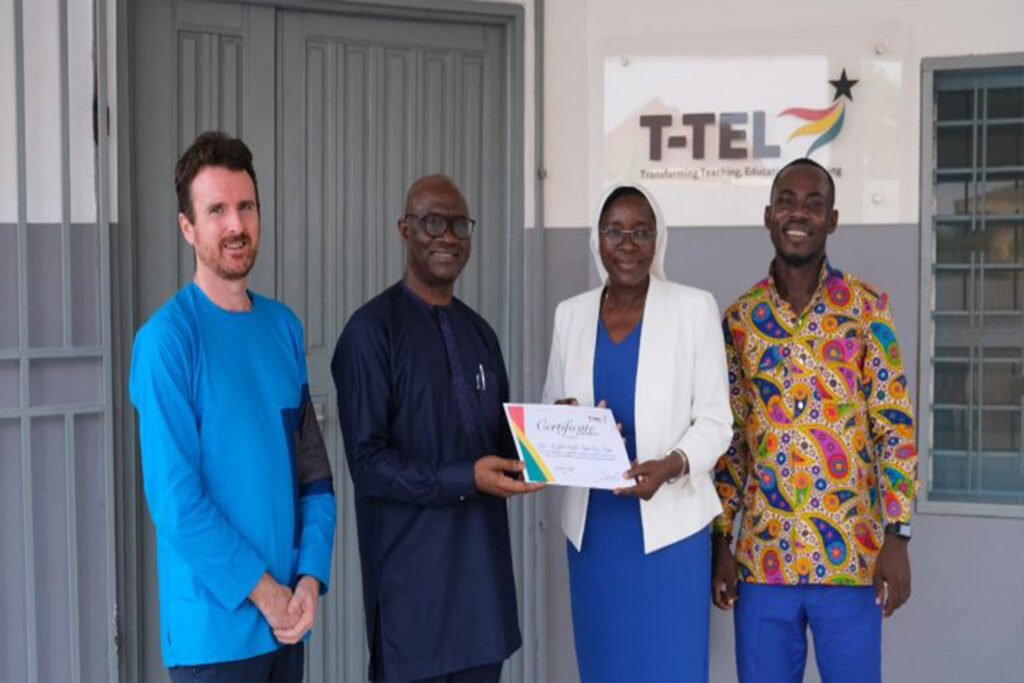
T-TEL facilitates a one-day training for the Colleges of Education Weekly Journal Research Desk. Group photo of participants  Transforming Teaching, Education & Learning (T-TEL) facilitated a one-day research training workshop for the newly constituted Research Desk of the Colleges of Education Weekly Journal (CoEWJ) on Thursday, February 10, 2022, at the T-TEL head office in Accra.  The Journal has raised the profile of Colleges of Education over the past few year by reporting on the significant changes that have taken place in teacher education, including the introduction of the B.Ed. degree in Initial Teacher Education and accompanying university affiliation. The Research Desk is an independent wing of the Journal whose primary objective is to collect and analyse accurate data for news articles. The Research Desk is led by Rev. Sr. Elizabeth Amoako-Arhen, s the former Principal of OLA College of Education. She is well suited to this role because of her   expert knowledge and understanding of teacher education. The Journal requested T-TEL’s support to facilitate a capacity building training workshop for its Research Desk team as part of efforts to expand its work and produce well-informed news reports backed by research data. Executive Director of T-TEL addressing participants before the training sessions. The training focused on: 1) Identifying research issues and framing research studies. 2) Conducting rapid and impactful research (including the Deep Dive Methodology). 3) Writing for impact to ensure that findings are presented effectively. 4) Communicating findings and engaging stakeholders and the media. Facilitators of the sessions were Robin Todd, the Executive Director of T-TEL, Abdul-Karim Kadiri, T-TEL’s Research and Learning Coordinator and Mabel Viviey, T-TEL’s Communications and ICT Coordinator. In attendance were Larry Agbador, Editor-in-Chief of CoEWJ, Rev. Sr. Elizabeth Amoako-Arhen (Research Desk Lead), Daniel Fenyi, Clarke Yalley, Daniel Adom-Fynn and Millicent Obodai and Lucy Adzo Kudjoe from the National Teaching Council. The training was organized in three sessions. The first session focused on identifying and framing research issues or problems. Participants worked in groups of three and were presented with sample texts to tease out research problems. Each group presented their findings and their approach to framing their research problem. A participant presenting on behalf of his group The second session focused on conducting impactful studies such as ‘deep dive’ research work. One of the benefits of the deep dive is that it can be conceptualized and conducted rapidly, thus providing timely data to inform current topical issues and policies. This may be more useful to the Research Desk than more traditional and academic research studies which, will more rigorous, may take several years before results can be published. Deep Dives also enable researchers to learn from ‘outliers’ (institutions in a sample population which are doing particularly well or particularly badly against a certain metric) which is ideal for research teams which may lack resources and time to conduct large-scale fieldwork. The third session focused on how the Research Desk can communicate its research findings to stakeholders. In her presentation Mabel Viviey stressed the need to engage the media in a meaningful way to increase visibility. Media inclusion can help advance communication and prevent the risk of misinterpretation. Mabel also explained ways to present findings to the public– this includes developing bite-sized information and using infographics, among others. Prof. Mohammed Salifu, Director General of the Ghana Tertiary Education Commission, joined the team for the closing session and also shared a few words with participants. He advised the team to be ethical in delivering its mandate and ensure they report accurate and reliable information backed by research data. He also stated that he was impressed with how far the Journal has come, stating, “the Journal has been very instrumental in communicating the various teacher education reforms and also complemented efforts of the reforms taking place in our Colleges of Education.”  Prof. Salifu, Director General of GTEC (second from left) addressing participants of the training Robin Todd, in his closing remarks, commended the Journal and mentioned that T-TEL looks forward to collaborating with the Journal through its Research Desk to undertake research studies that will inform policy and practice in teacher education. The Team Lead Sr. Elizabeth (second from right) receiving certificates on behalf of the Research Desk The Team Lead, Sr. Elizabeth, expressed her appreciation for the team’s training. She said, “I know [that] the team is committed to working to advance teacher education, and I am hopeful that we will succeed.”

News

T-TEL collaborates with Accra College of Education to mark International Day of Women and Girls in Science.

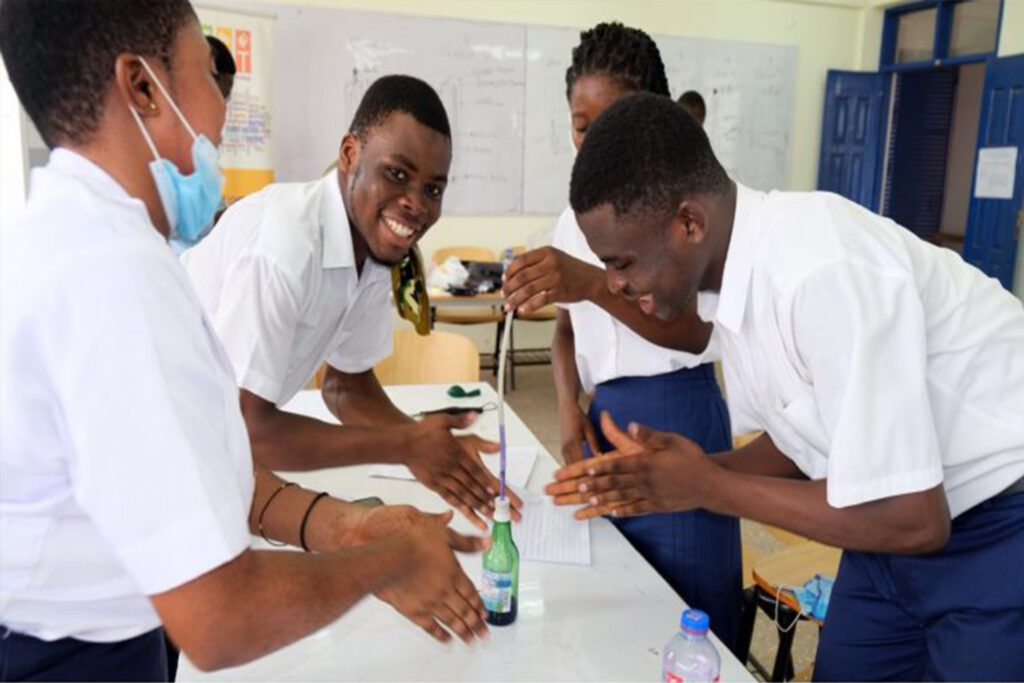
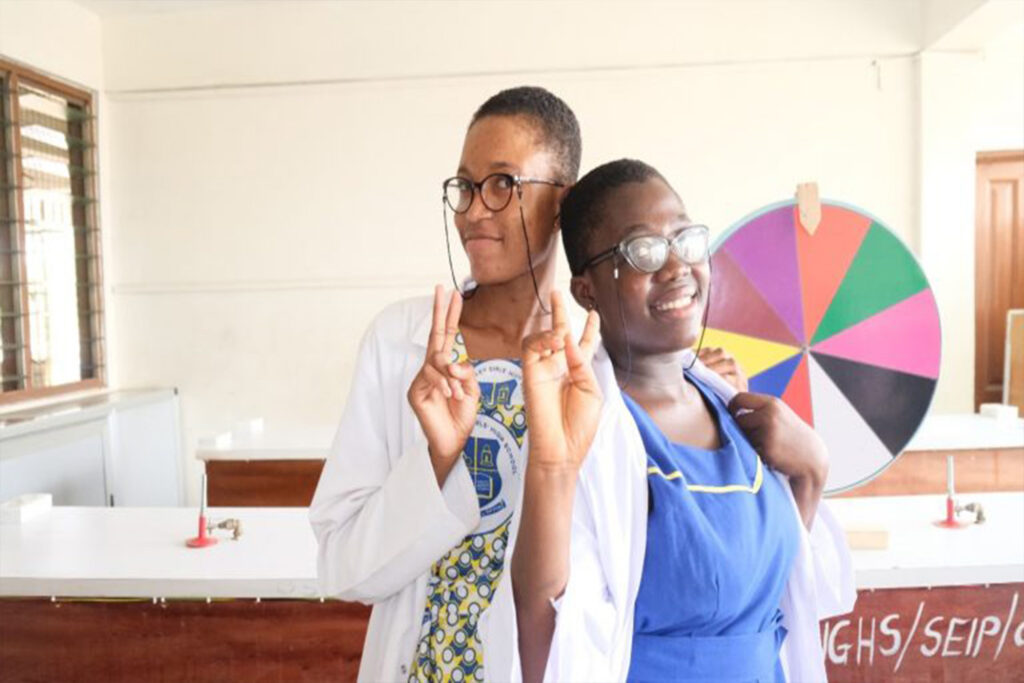
T-TEL collaborates with Accra College of Education to mark International Day of Women and Girls in Science. Students doing simple science experiment The Accra College of Education through its Teaching and Learning Resource Centre, collaborated with Transforming Teaching, Education and Learning (T-TEL) to commemorate International Day of Women and Girls in Science (IDWGS) 2022. The day aimed to recognise the role of women and girls in science and the need to support, encourage and empower more women and girls to pursue science as a career. To mark this day, the College and T-TEL visited the Accra Wesley Girls High School in Kaneshie, Accra, on February 11 2022, to conduct easy science experiments. The experiments were a donation from the Institute of Engineering and Technology (IET) in the UK given to the college to support its outreach efforts to local schools in the Greater Accra region. In her opening remark, the headmistress of the school Ms Leticia Bray expressed her delight at the opportunity presented to the school to engage in science activities to mark IDWGS. According to her, opportunities like this will enhance female participation and encourage them to pursue more STEM careers for “we cannot do without science” in our daily living. She also added that the visit by T-TEL and the College was appropriate as it ties with the plans of the Ministry of Education for schools to commemorate IDWGS. Headmistress of the school speaking to the students before the experiments Following her remark, Ms Perpetual Sroda Wadjoly, a newly trained teacher from St. Teresa’s College of Education, facilitated the process by supporting the students through a step-by-step guide on Building-a-Torch and creating Paper Helicopters. With support from teachers from the science department, each student built a torch. Tools needed to produce the torchlight were a foam core, two batteries, LED light, and two polystyrene layers. The 5-step experiment procedure resulted in each student building their own torchlight.

News

On The Path to Becoming a Teacher

On The Path to Becoming a Teacher Mariam (first from left on the front row) and other student teachers (mentees) with their mentors at Abrefa JHS, Wenchi  My name is Mariam Yakub, a Level 400 Bachelor of Education (B.Ed.) student teacher at Al-Faruq College of Education, training to become a Science and Mathematics teacher. Though I did not set out to become a teacher, I have now developed a passion for the profession. I want to have an impact in young people’s lives by influencing them positively. I want them to build upon their self-esteem and believe that no matter their background, if they work hard, they will become successful in life. I have often been asked why a female like me finds interest in teaching Science and Mathematics. I shrug and say they are like any other subjects. I have always loved Science and Mathematics. My goal is to change the perception that boys are better than girls at Maths. I have a strong conviction that women and girls can equally do well in all endeavors if they put their minds and efforts to them. Though I am a Moslem and attended an Islamic secondary school, I got a better appreciation of Islam and its teachings at Al-Faruq College of Education. At the College I got the opportunity to continuously practice teaching in basic school classrooms during Supported Teaching in Schools (STS), developed my self-confidence and learnt more about my religion. I have also been equipped and exposed to various methodologies in teaching such as using group work, assessment, innovation, brainstorming and pair work (think-pair-share). The approaches we use are learner-centred where the focus is on the learner learning at their own pace and building on their existing knowledge rather than that of our predecessors where the teacher is at the heart of teaching and learning. Being a student teacher has really helped me build my confidence. I was a very timid person, however going through the College, I have been able to overcome this challenge.  I can now lead a whole lesson by myself and seeing students participating actively during my lessons gives me so much joy.What I like about the B.Ed., is the Supported Teaching in School (STS) component. Right from Level 100, we started observing lessons in basic schools and interacted with the teachers who had been assigned to us as  mentors. We also asked questions on the old and new curriculum. This helped us to better appreciate the curriculum and the various teacher education reforms. At first, the basic schoolteachers found it annoying that we were asking so many questions, but they later came to appreciate why we sought the information. I believe this approach has made us more efficient in the teaching field. Previously, student teachers only went on STS in their final year (level 300) but it’s no longer the same. We now have the opportunity for real classroom experience through STS right from Level 100. This has afforded us the opportunity to observe and know more about classroom behaviour and practices to contextualize our lesson preparation and delivery. In Level 400, I was posted to Abrefa JHS School, Wenchi. The first activity we did was on cooperative teaching (joint teaching with mentors where we share teaching between colleagues) at the initial stages. Our mentors were kind and to ensure we settled in quickly, varied orientations sessions were organized which made us feel welcomed. These sessions offered us good information about the partner school, key stakeholders and how to maintain good relations. Integrating technology and innovation have been key in my lessons. Innovation is all about using technology and varied strategies to empower learners to improve their understanding and skills. Technology is a powerful tool that can transform learning. I also ensure that I include practical materials and demonstrations wherever possible to make learning enjoyable in my lessons. For example, when I was teaching ‘rectilinear propagation of light’ (the scientific principle that light travels in a straight line), I integrated technology in the lesson. To demonstrate, I brought a few tools such as 3 pieces of squared cardboards with a hole in each of them which we labeled A, B & C, a light bulb, wire, and stones to use as stands to hold the cardboard firmly. To make the learners understand the lessons, I took them through the procedures. First, I introduced the lesson and then asked the students to identify the items. I tried to encourage classroom participation by inviting the students in groups to arrange the pieces of cardboard in a straight line 2 metres apart. I then used a wire through the holes to ensure the line was straight. After observing the light through the straight line with the wire in place, we then changed the position of cardboard B from the line. I then asked them if they could see the light. The same procedure was repeated for all the students to observe the lesson. After the observation, I asked them what they saw; and they shared their views enthusiastically.                                                                        Using practical demonstrations in the lesson: rectilinear propagation of light Another instance where I integrated practical teaching and learning materials (TLMs) in my lesson was when I was teaching about the ‘Eclipse’. I brought some cardboards, torch light and stones for stands, and a big white cardboard. The students and I then cut out circular models representing the moon, the sun, and the earth in varied sizes. I then traced a big white cardboard so that they will be able to view the shadow of it. I then placed the model representing the moon, the sun, and the earth. I called the students row by row so they could view it. I turned on the touch light so they could observe it. After that, I changed the position of the sun and then the moon. After that I asked the learners what an eclipse is, and they were able to articulate it. I felt happy because

News

T-TEL joins the Colleges of Education Weekly Journal to commemorate its 3rd Anniversary

T-TEL joins the Colleges of Education Weekly Journal to commemorate its 3rd Anniversary The Colleges of Education Weekly Journal is a weekly online newspaper that provides a forum for diverse views, discussion and news across Ghana’s education system. Since its inception, the Journal has focused on using media advocacy as a critical tool to facilitate conversations around teacher education reforms.The Journal celebrated its third anniversary on October 29, 2021, and invited T-TEL to join them on a College Tour to Gambaga College of Education in the North East Region. The tour aimed to highlight the College’s achievements and build a relationship between the College and the media.    Principal of Gambaga College of Education welcoming the Director in charge of Tertiary Education from the MoE Present at the event was the Director in Charge of Tertiary Education, Dr. Eric Nkansah – who represented the Deputy Minister of Education, the former Chairman of the Governing Council of Gambaga College of Education, Mr Kolbilla Dan, the College Principal, Mr Kassim Nantomah, the Vice-principal, staff of the College and the media. Director in Charge of Tertiary Education, Dr. Eric Nkansah addressing participants Participants toured the College’s facilities to get a feel of what the college offers. They began by visiting the administration block, the library, dormitories, and the College’s annex, where other infrastructural developments are taking place.   Touring the College Library Field visit to the College’s new site Following the tour, there was a media engagement where the Principal catalogued some successes of the College. He gave firsthand insights into how the College has managed to produce inspirational teachers who are making significant impact in their classrooms. In his opening remark the Principal said he was happy to host the Journal’s Anniversary as he believed that the exposure would propel the College to greater heights. Gambaga College started in 2012 as a community college with 310 students and 12 tutors before being absorbed by government in 2015. Currently the student population is over 800, with 35 teaching staff. The College runs three programmes – Early Grade Education, Primary and Junior High School education. Gambaga College of Education Principal briefing participants after the tour The Principal mentioned that the College had recently managed to construct new male and female dormitories and a conference room. The student body, through the Student Representative Council, have also supported the college by building a two-unit dormitory. The College expressed appreciation for T-TEL’ support through the Payment-by-Results mechanism, which was an initiative designed to incentivize Colleges of Education to work towards their agreed improvement targets, and which enabled them to provide a changing room for female students. T-TEL also supported the College with fairly used office equipment comprising chairs, tables, cabinets, laptops, computers, printers, and tablets.  “T-TEL also supported the College with some amount of money for which we were able to expand our IT infrastructure to cover all parts of the campus” – Mr. Nantomah, Principal of Gambaga College Despite these successes the College still faces significant infrastructural challenges and hope that the media tour will help bring further improvements in the College. The College has a strong focus on Quality Assurance and developed a monitoring framework to track performance which has contributed to increased  enrolment. The College  has also developed a strategic plan and policies that guide their operations and help them achieve objectives.  Speaking on behalf of the Deputy Minister for Education, the Director in Charge of Tertiary Education congratulated the Journal on its anniversary and acknowledged its efforts and support in teacher education. He was impressed with how the journal has helped fill some gaps in teacher education by communicating the various changes that have occurred in Ghana’s Colleges of Education. The Journal desires to continue advocating for change in teacher education and its primary aim is to report critical issues, challenges, and successes in the education sector to educate and inform stakeholders associated with education in Ghana and beyond.   Group photo of management of Gambaga College of Education, Dir. in charge of Tertiary Education, a T-TEL rep and Colleges of Education Weekly Journal team To mark the Journal’s 3rd Anniversary, T-TEL’s  Executive Director, Robin Todd, shared a congratulatory message with the journal. T-TEL would like to sincerely thank the Colleges of Education Weekly Journal for their efforts to deliver high quality and informative journalism which has helped to raise the profile of Colleges of Education and teacher education in Ghana. Over the past few years Ghana has embarked on an ambitious set of teacher education reforms, centred around the roll-out of a new Bachelor of Education  degree in Initial Teacher Education by universities and affiliated Colleges of Education. These reforms, despite some challenges, have been groundbreaking and successful but it remains the case that many Ghanaians do not know about these achievements and reforms which have been described as ‘truly world class’ by international experts. The Journal has played an important role in raising awareness of these reforms and challenging those of us who work in the teacher education system to do more to address implementation issues and concerns. In T-TEL’s view the Journal has always strived to write informed, balanced and fair articles. We would like to thank Larry and his staff for their support to T-TEL’s communications campaigns over the past couple of years and for helping to publicize our partnership with the Ghana Tertiary Education Commission in 2020 when we delivered mobile phones and SIM cards to Colleges of Education across the country.  The Journal was also the first media outlet to carry the news about T-TEL’s transition from a donor-funded project to a Ghanaian registered and owned not-for-profit organization. I am happy that, in our own small way, T-TEL has been able to support the Journal by providing training to their management and staff to help prepare them for the challenges ahead as they continue their journey to provide high quality reporting on our teacher education system. T-TEL values the work that the Journal carries out and we are always available to

News

“Teachers at the Heart of Education Delivery”: Lessons from OLA College of Education, Cape Coast.

“Teachers at the Heart of Education Delivery”: Lessons from OLA College of Education, Cape Coast. The world’s unexpected pandemic – COVID-19 virus, grounded many activities worldwide including education and Ghana was not spared the brunt of the pandemic. The Government of Ghana announced the closure of all schools on Sunday March 15, 2020, and further directed tertiary institutions to take steps to continue academic work. As a measure to fight the pandemic, the Ghana Tertiary Education Commission and mentoring universities supported by T-TEL, instituted a Teacher Education ‘Virtual Learning Taskforce’ to ensure continuity of teaching and learning in response to school closures caused by COVID-19. The initiative included the training of 1,900 tutors of all 46 Colleges of Education on effective online delivery by the Amsterdam University of Applied Sciences; training, and deployment of trouble shooters from the colleges who provided further assistance to tutors; provision of smart phones and SD cards pre-loaded with Bachelor of Education (B.Ed.) resources for close to 4,000 student teachers; zero rating a B.Ed. microsite (including course materials and references) as well as the provision of e-Learning Fund for Wi-Fi extension project in some colleges. What did we do? Building on the national initiatives rolled out, the Management of OLA College of Education, and the ICT Unit in collaboration with the Quality Assurance Unit rolled out a fast-track refresher online training for its tutors and students to equip them to be efficient in facilitating online teaching and learning interaction using the Google Classroom platform and Telegram; discussion/interactive approaches.   What changed? As a result of these interventions both staff and students became technology literate. They were able to access materials online, integrated the use of online tools in teaching and learning and became conversant in using electronic assessment tools such as Google Forms and Quiz Bot on Telegram – these made it easier for feedback as compared to the traditional manual forms. With this approach learners now received feedback in real-time. What have we learnt? One of the key elements of virtual learning is flexibility. At the beginning of the online lessons, we realized that about 60% of students were not patronizing the course during the agreed time schedule because of the synchronous mode adopted. An asynchronous mode was adopted which provided learners the opportunity to go online at their own time and upload their assignments. The use of the online Google Classroom helped improve teaching and learning in the areas of lesson planning, online integration of lessons, assessment of lessons and research and the professional development of tutors. “We saw a significant increase in the number of students who participated in lessons as the asynchronous mode enabled learners to learn at their own pace.” The number of students accessing the Google Classroom platform increased as compared to when the College adopted a Learning Management System (LMS) its mentoring university was using. One of the challenges identified with blended learning was the cost of data. As a result OLA College of Education collaborated with one of Ghana’s telecom providers to help close the connectivity gap tutors and student teachers faced during the pandemic. A year down the line OLA College of Education is implementing blended learning. All 50 teaching staff are confident using Google Classroom and it has remained the dominant LMS on Campus with its use monitored by the college. The theme for this year’s World Teacher Day: “Teachers at the Heart of Education Delivery” is an apt phrase with which tutors in Colleges of Education in Ghana, particularly OLA College of Education has embraced. At OLA College of Education, tutors and students can use ICT to teach and learn all subjects effectively. It was an opportunity to prove that online teaching and learning is possible, and beneficial. The exercise showed that significant technological and skills gap existed among student teachers and tutors in colleges of education and that much investment in technology infrastructure is required to make education more accessible in the 21st Century. Authors: Victor King AnyanfulHead, ICT Unit, OLA College of Education, Cape Coast Mark Valentine AikinsE-Learning Coordinator, OLA College of Education, Cape Coast, Credit: Daily Graphic

News

First Annual General Meeting of Transforming Teaching, Education and Learning (T-TEL) held in Accra

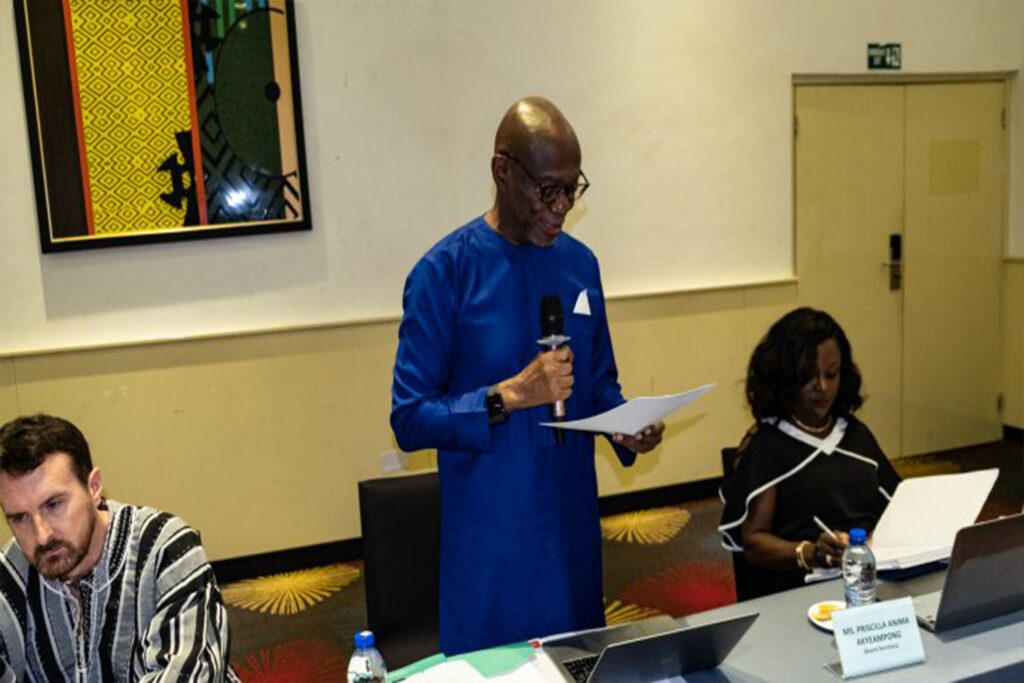
First Annual General Meeting of Transforming Teaching, Education and Learning (T-TEL) held in Accra In fulfillment of the Companies Act, T-TEL has held its first Annual General Meeting (AGM) in Accra, Ghana. The meeting gave the Board of Directors an opportunity to report on activities to the Subscribers of the organisation after its first year of incorporation. In attendance were subscribers, members of the Board of Directors, T-TEL Key Advisors and Senior Management Team. The event, chaired by Prof. Jophus Anamuah-Mensah, T-TEL Board Chair, discussed two reports: the annual report of the Board of Directors presented by the Executive Director of T-TEL and the audited financial statement of the organisation presented by A.D. and Associates respectively. Among the key issues discussed were updates on work done so far, progress report on T-TEL’s three key objectives, projects implemented and the appointment of two new members of the Board of Directors. Robin Todd, Executive Director, T-TEL presented updates on the key activities of the organisation within the period July 2020 and August 2021 Robin Todd, Executive Director of T-TEL in a discussion with a member of the Board of Director, Dr. Boakye-Yiadom and a Subscriber, Mr. Samuel Baba Adongo Dr. Michael Boakye Yiadom and Mrs. Aso Wusu Asante were appointed as new members of the Board of Directors. They bring to the Board, extensive experience in corporate governance and financial management respectively. A cross section of participants at the AGM  T-TEL Subscribers and Board of Directors meet for the first time at the AGM In his closing remarks, Prof. Anamuah- Mensah shared his good will message for the organisation. He stated: ‘I wish that T-TEL will grow and be the symbol of transformation in education in Ghana’.

News

Third Transforming Senior High School Education, Teaching & Learning Quarterly Planning Meeting held by T-TEL

Third Transforming Senior High School Education, Teaching & Learning Quarterly Planning Meeting held by T-TEL Transforming Teaching, Education & Learning (T-TEL) held the third Quarterly Planning Meeting for the Mastercard Foundation supported Transforming Senior High School Education, Teaching and Learning programme on Monday, August 2, and Tuesday, August 3, 2021. The meeting took place on zoom and in-person at the T-TEL office, headquartered in Accra. Transforming Senior High School Education, Teaching and Learning (T-SHEL) is a Government of Ghana programme implemented in partnership with the Mastercard Foundation. The programme aims to achieve an extensive and sustainable transformation in the quality and relevance of Ghana’s Senior High School (SHS) system. T-SHEL seeks to ensure that every SHS graduate in Ghana is equipped with the subject knowledge, analytical and critical thinking skills and attitudes needed to progress to further studies or successfully enter the world of work. The third Quarterly Planning Meeting provided an opportunity to review progress to date and to address issues and challenges going forward. The meeting was attended by representatives from the Ministry of Education (MoE), the National Council for Curriculum and Assessment (NaCCA), the National Teaching Council (NTC), five public universities (KNUST, UEW, UG, UCC and UDS) and the Ghana Tertiary Education Commission (GTEC).The meeting provided an opportunity for T-TEL’s Executive Director, Robin Todd and T-TEL’s Board Chair, Professor Jophus Anamuah Mensah, and others present to share updates and progress made against planned activities during the quarter under review.   Robin Todd, Executive Director, T-TEL, giving a presentation on T-SHEL In his remarks, Prof. Anamuah-Mensah, T-TEL’s Board Chair noted that there had been significant progress to date and he commended staff, key advisors and partners for their “continued effort and resilience to supporting Ghana’s education system“. Robin Todd provided a progress update against T-TEL’s key performance indicators. Using the traffic light progress tracking system, he indicated that most of the outputs in the roadmap were on course to be achieved and that there was now greater clarity as to how T-TEL would support partners such as GTEC and NaCCA to achieve their agreed key performance indicators. Coordinators, Key Advisors and partners provided updates on progress made during the quarter, lessons learnt and plans for the next quarter. Key focus areas included the forthcoming Ministry of Education Secondary Education Strategy and support to the B.Ed. in Initial Teacher Education in Universities and affiliated Colleges of Education (CoEs).  Beryl Opong Agyei, National Coordinator, Teacher Education and Prof. Jonathan Fletcher gave updates on the support to B.Ed. in Initial Teacher Education where MoUs have now been signed with five public universities and good progress is being made across various areas including regular College level Professional Development sessions for tutors to strengthen their delivery of the B.Ed.  According to Beryl, 5,000 copies of Tutor Professional Development Handbooks for Year 2 Semester 2 B.Ed. student teachers have been printed and distributed to universities and CoEs. These Handbooks have integrated Gender Equality and Social Inclusion (GESI) and Information, Communications Technology (ICT) so that these are incorporated within tutors’ lessons.      Group Work Session Inaugural Winners of T-TEL Excellence Award Three T-TEL staff members and key advisors also received the inaugural T-TEL Excellence Award during the Quarterly Planning Meeting. This award is given to staff and key advisors for work which embodies all six core values of T-TEL- Accountability, Inclusivity, Inclusivity, Collaboration, Creativity, Excellence.  Abdul-Karim Kadiri, Dr. Eric Daniel Ananga and Rocky Asuman demonstrated Creativity, Excellence and Collaboration in their line of work. They were each awarded a ‘Certificate of Excellence’ in recognition of their achievement.   Abdul-Karim Kadiri (left), Dr. Eric Daniel Ananga (middle) and Rocky Asuman (right) receiving their award certificates

News

”We are changing the way we look at education in this country”- Robin Todd Addresses Gambaga College of Education

”We are changing the way we look at education in this country”- Robin Todd Addresses Gambaga College of Education                                                       Robin Todd addressing the congregation The Gambaga College of Education ceremonial grounds was an interesting place on Saturday, July 24, 2021, as Mr. Robin Todd, Executive Director of T-TEL surprised everyone present by beginning his motivational address in Mampruli. Mampruli is a language spoken in northern Ghana by the Mamprusi people. He made this speech at the 2nd graduation ceremony of Gambaga College of Education (CoE).  Gambaga CoE is one of Ghana’s 46 public Colleges of Education located at Gambaga in the North East Region of Ghana. The College is affiliated to University for Development Studies.   Mr. Todd stated that Ghana had made significant changes in how teachers are trained, citing the importance of the National Teachers’ Standards. “The National Teachers’ Standards, which guides teacher preparation and practice in the country, tells us what a good teacher in Ghana must do“.  He further urged the graduands to practicalise what they had learned in the College to impact the classroom positively. “When I came to the College, I saw many exciting and more practical approaches to teaching. It was new, it was different, and it was interactive. We are changing the way we look at education in this country, but it all amounts to you, the graduates, and the student teachers. You have been trained in this new and exciting way, which will help us develop as a nation. If you go back to school and start using the same old practices, these investments will be wasted.” A total of 880 students graduated with Diploma in Basic Education. The number comprises of graduates from 2018, 2019, and 2020 year groups. The 2018 batch had 315 graduates, the 2019 batch had a student population of 339, and the 2020 batch had 226 graduates. Mr. Ezekiel Agambire Awane and Ms. Jane Achegebuga Addi were the overall best students for the 2020 batch.  Mr. Apungu John Aboyure, Ms. Banono Mavis and Master Akolgo Nyaaba Amos and Ms. Kasim Rabiatu were also adjudged Best Graduating students for 2019 and 2018 respectively.  They received various award packages, including brand new laptops and mobile tablets. In his address, the Principal of the College, Mr. Kassim Korah Nantomah, discussed student enrollment and infrastructural challenges and some actions taken to address some of the challenges. “Through Internally Generated Fund, we managed to put up a 10-unit and 2-unit dormitory blocks which are now serving as student hostels. Though not enough, these facilities are solving issues related to the long commute by students for lectures each day. Mr. Nantomah also applauded T-TEL for its support to the College. “I cannot conclude on physical infrastructure without mentioning T-TEL’s support to the College. The College received fairly used office equipment from T-TEL comprising chairs, tables, cabinets, three laptop computers, a printer, and a tablet. T-TEL also supported the College in constructing a changing room for female students to foster inclusive learning through the Payment by Results (PbR) project.”    Mr. Nantomah giving the principal’s address  Dignitaries present at the graduation ceremony were the North East Regional Minister, Mr. Yidana Zakaria, Prof. Imoro Braimah, Former Provost of the College of Humanities and Social Sciences – KNUST, Chiefs, the Honourable Member of Parliament for Walewale Constituency, Hajia Lariba Zuwera Abudu, Acting Municipal Chief Executive of East Mamprusi Municipal Assembly, Representative of Vice-Chancellor of the University of Cape Coast, Rev. Dr. Samuel Naadam, Representative of the Vice-Chancellor of the University for Development Studies, Professor Anthony Donkor, and Principals of Colleges of Education. Source: Colleges of Education Weekly Journal.

Scroll to Top