
Using Data to Strengthen Ghana’s Secondary Education Reform
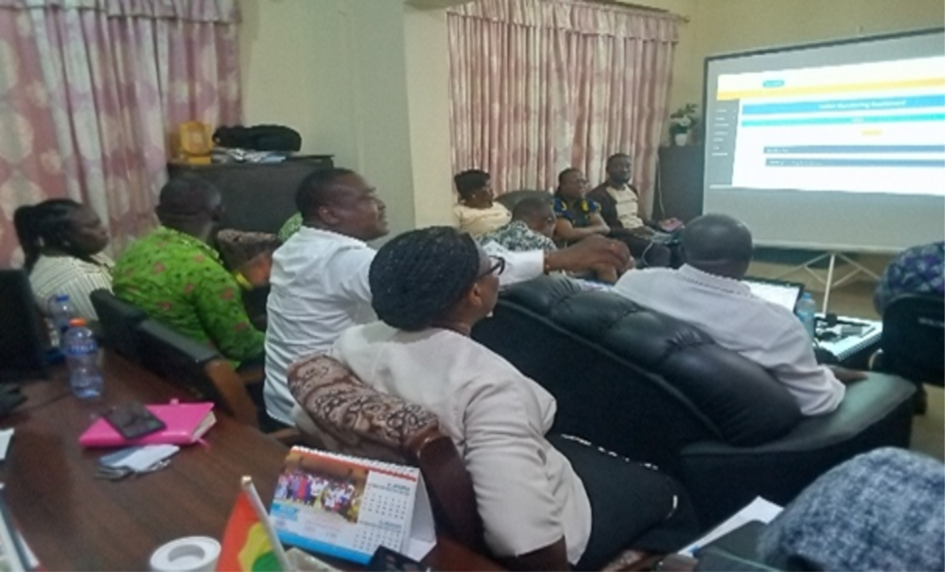
Image 1: Cross section of Volta Regional Oversight Committee members discussing the SEI Dashboard data (https://t-tel.shinyapps.io/secondary_reform/)
Ghana’s Ministry of Education recognizes that strong data underpins good decisions. With over 700 Senior High Schools and Senior High Technical Schools and more than 30,000 basic schools, tracking which schools are performing well and which need support is vital. Reliable and timely information is essential to driving success.
Whilst basic schools had the Mobile School Report Card (mSRC) to track progress, Senior High Schools lacked an equivalent system. Beyond the Free SHS portal, which tracks enrolment and the annual EMIS data collection, there was no mechanism to monitor and track key metrics on teaching and learning. A Deep Dive carried out by the Ministry of Education and T-TEL in 2021 found that Ghana Education Service (GES) Regional Education Offices had very little data from Senior High Schools and found it difficult to identify which schools were doing well or struggling. Whenever they needed data from schools they had to make ad hoc requests.
Building Something New Together
The introduction of the secondary education reform in 2023 created an urgent need for a more responsive and data driven system. With a new curriculum, new assessment system, guidance and counselling standards, School Improvement Plans and Professional Learning Community sessions being rolled out across schools, the Ministry needed a way to monitor whether these reforms were being implemented with fidelity across schools. The system could no longer rely on annual or ad hoc data. A coordinated, real-time approach became essential.
In 2023 the Ministry of Education, supported by T-TEL and the Mastercard Foundation, brought all key actors to the table to design a shared solution. This included the Ghana Education Service (GES), the National Council for Curriculum and Assessment (NaCCA), the West African Examinations Council (WAEC) and other agencies. This solution was designed to provide data to answer key questions related to the reforms. The process was collaborative with institutions working together to decide what needed to be tracked and how the system should function. Agencies agreed on the creation of the Secondary Education Institutions (SEI) dashboard (https://t-tel.shinyapps.io/secondary_reform/) , an open-source tool designed to bring visibility, accountability and informed decision-making to the reform. This system covers over 720 schools, 68,000 teachers and almost 1.5 million learners with an operating cost of only $500 per month, a cost which the system can afford to sustain.
What the Dashboard Tracks
The SEI dashboard focuses on core elements of the secondary education reform.
- Attendance and topics covered during weekly teacher-led Professional Learning Communities (PLC). This is where teachers learn from each other and improve their practice. Through the dashboard, more than two million hours of PLC sessions organised across schools have been tracked, showing the scale of teacher collaboration and professional learning happening nationwide.
- Student records, monitored through the WAEC Student Transcript Portal, which is linked to the SEI Dashboard. This ensures learners have complete and accessible academic records. Over 60 million records have been uploaded since the system went live in 2024, representing a 97.2% national average completion rate.
- Lesson observation data tracks whether teachers are using new teaching approaches in their classrooms.
- School Improvement Plans (SIPs) are monitored to check whether schools are delivering their From the dashboard, 710 schools have uploaded SIP objectives with an 86.3% overall target completion rate.
The dashboard also tracks tablet distribution and usage, trends from the Teacher Helpline showing what support educators need and participation in Values Learning Community sessions as part of character education for young people.
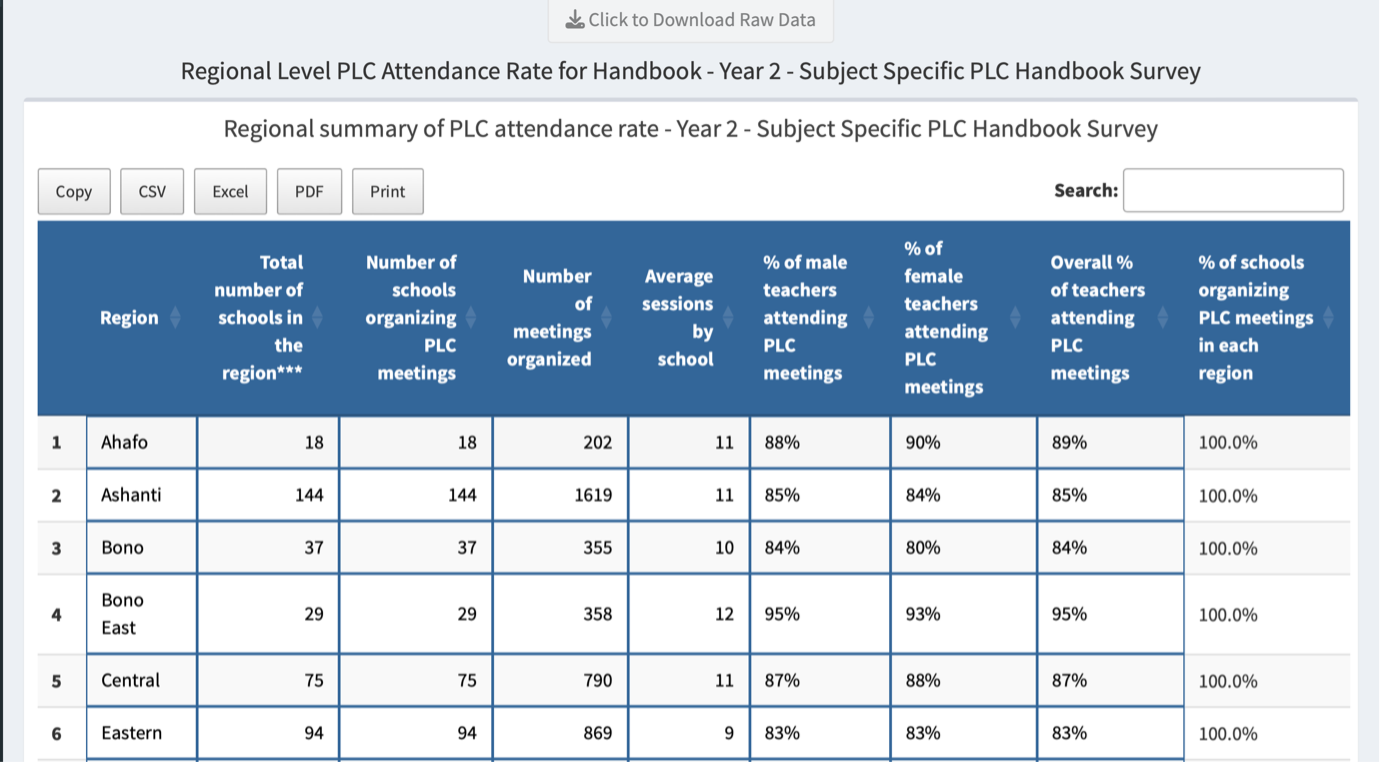
Image 2: PLC attendance from the dashboard
Operationalising the data
The existence of the data is not enough to be effective, it must be regularly reviewed and acted upon.
Every Ghana Education Service Regional office meets monthly through a Regional Oversight Committee, chaired by the Regional Director of Education. This Committee involves regional representatives from the Conference of Heads of Assisted Secondary Schools (CHASS) and the National Schools Inspectorate Authority (NaSIA) as well as Ghana Education Service staff. Together they review the dashboard data and decide what to do next, with Regional Monitoring Teams making visits to schools where issues have been identifed.
Ghana Education Service then operates a monthly National Oversight Committee meeting where all 16 Regional Directors attend online to discuss progress and areas which need attention and support from national agencies.
At a recent National Oversight Committee meeting, regional representatives shared updates on their progress. Rafic Ben Sam, Planning Officer from the Western Region Education Office, explained how the dashboard helps his team see what schools are doing in key reform areas.
“During visits, our regional monitoring teams observe how school management and teachers are implementing the new Guidance and Counselling framework. We track PLC attendance and watch how schools upload data to the dashboard,” he noted. His team made five visits to assigned schools in the first quarter, with the Regional Director joining four follow-up visits to verify progress and address challenges identified during earlier monitoring.
The dashboard makes information visible so regions can act, whether the data shows good performance or reveals problems. When completion rates were low for student data uploads on the Student Transcript Portal, Regional Directors and their teams engaged schools directly and sometimes sent formal letters requiring schools to upload the needed data. When PLC attendance was low in some schools, regional teams engaged school management to ensure teachers participated in sessions. This is how the reform stays responsive to what is actually happening on the ground. Problems get identified early. Solutions are tested quickly. What works gets shared.
The dashboard data is easily accessible to staff from school, district, regional and national levels. It is used by approximately 1,200 GES staff every day, showing how it has become a key pillar of the secondary education reform.
What The Data Means for the Ministry and Schools
The real value of the SEI dashboard lies in how it drives decisions and action across the system. The data does not sit in reports – it prompts responses that strengthen the reform on the ground, whether those responses are immediate interventions or deeper systemic changes.
When the dashboard revealed that Greater Accra had the lowest completion rate on the Student Transcript Portal, the Regional Director of Education convened all schools, reviewed the data with headteachers and set clear expectations for improvement. The response was significant, with completion rates climbing from 40 per cent to 97.2%. Similarly, data gathered from a monitoring visit in October 2025 showed that out of the 68 schools in Volta Region, only four were actively using the tablets they had received. The National Oversight Committee sent a member to the region to engage the Regional Director and management team. This has led to a significant improvement and all 68 schools are now using their tablets for teaching and learning.
Sometimes the dashboard reveals issues that require deeper investigation. Lesson observation data showed that teachers were not consistently applying the new assessment methods required by the curriculum. The National Oversight Committee conducted a review and found that whilst teachers understood curriculum content, many were unclear on how to assess learners using the varied methods the reform required. The response was systemic. The Ministry worked with GES and NaCCA to refocus the subject specific PLC handbooks and digital tools to embed detailed assessment guidance.
The dashboard also highlighted varied ICT knowledge and usage among teachers. Recognising that digital literacy was essential for delivering the new curriculum, the Ministry, GES and the National Teaching Council designed a comprehensive digital literacy and ICT integration course for all 68,000 teachers. 63,328 teachers completed this course, representing 93% completion and far exceeding the original 65% target.
For headteachers, the change has been significant. They can see clearly what is happening in their schools and where improvement is needed. For Regional Directors and their teams, the dashboard highlights where to invest time and resources. For the Ministry and GES, it provides a clear picture of where the secondary education reforms are advancing and where additional support is required.
The SEI dashboard is a working system where everyone can see the same information, ask the same questions and work together on the answers. That shared understanding is what makes the difference.